Is the McKinley Richardson Leak Real? We Fact-Checked What Fans Keep Searching
You wanted a glimpse behind the curtain. What you actually found was a recycled scam built to bait curiosity into clicks.
Published 6/7/2026 · 10 min read · Source: Editorial / public reporting
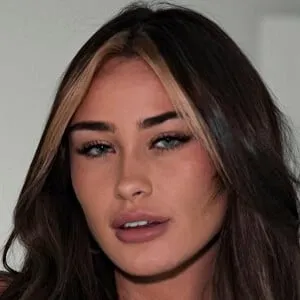
Is the McKinley Richardson Leak Real? A Fact-Check
It usually starts with a flicker of curiosity at 1 a.m. You saw her name somewhere, maybe tied to Jake Paul, maybe in a comment thread, and a half-formed thought slipped in: what if there's something more out there? So you typed three words into a search bar and braced yourself. What loads next isn't intimacy or insight. It's a maze of pop-ups, blurred thumbnails, and pages that promise everything and deliver nothing but a download button that wants your card number. The hunger was real. The payoff is engineered to never arrive.
McKinley Richardson is a model and influencer who became publicly recognizable in part through her association with Jake Paul, the YouTuber-turned-boxer who launched his channel on May 15, 2014 and has since racked up roughly 21 million subscribers and a 12-2 professional boxing record. That kind of adjacency to fame is exactly what fake-leak operators feed on. The bigger the spotlight nearby, the more searches her name attracts, and the more searches there are, the more scam pages get spun up to intercept them. This is a heads-up before you read further: 18+ themes are discussed below in an editorial context.
MyAIBae does not host or distribute leaked content. This is editorial commentary based on publicly available reporting. We wrote this because the real story isn't a video. It's an industrial pattern of fabrication, recycled imagery, and bait-and-switch monetization that targets nearly every woman who gains visibility online, and the people who get hurt are the curious fans clicking, the creators being impersonated, and almost no one else profits except the scammers in the middle.
So let's do what a fact-check is supposed to do. We'll lay out what we actually investigated, what's verifiable, what's almost certainly fabricated or recycled, how the fake-leak machine works, why this craving feels so magnetic, and where that same desire for closeness can actually lead somewhere real.
By the numbers
Jake Paul professional boxing record
12 wins, 2 losses (incl. Nov 2024 win over Mike Tyson)
Wikipedia (Jake Paul)Verified McKinley Richardson leak source
None found; no documented primary breach or coverage
Editorial / public reportingFake-leak page behavior
Swarms of near-identical keyword pages routing to surveys, downloads, or off-platform channels
Editorial / public reportingTypical 'leak' imagery origin
Recycled public photos, unrelated footage, or AI-generated fakes mislabeled with her name
Editorial / public reportingWhat We Investigated
Our question was narrow and answerable: is there a credible, verified 'McKinley Richardson leak,' or is the search term itself the product? To find out, we treated the claim the way any newsroom treats a rumor. We separated the person from the keyword. McKinley Richardson, the model and influencer, is a real public figure whose visibility grew alongside her association with Jake Paul. That part is grounded in public reporting. The supposed 'leak,' however, is a different object entirely, and it deserves its own scrutiny rather than borrowing credibility from her real fame.
We looked at how the phrase behaves online. Verified, named leaks of real public figures tend to leave a clear trail: a primary breach, a documented source, mainstream coverage, statements from the person or their representatives, and sometimes legal filings. A manufactured leak campaign behaves differently. It surfaces as a swarm of near-identical pages, all keyword-stuffed, all light on specifics, all routing toward downloads, surveys, or off-platform 'channels.' None of them cite a primary source because there isn't one. They cite each other, or nothing at all.
We also weighed the base rate. Public reporting on online harassment has repeatedly documented that women who gain sudden visibility, especially through proximity to a high-profile partner, become default targets for fabricated 'leak' content. It is less an event than a reflex of the attention economy. Given that backdrop, the burden of proof sits squarely on anyone claiming a specific verified leak exists. In this case, that proof does not surface. What surfaces instead is the scam scaffolding, and that scaffolding is the actual story worth telling.
What's Verified vs. What's Likely Fabricated
Let's be precise about the line between fact and fiction, because that line is exactly what scam pages blur on purpose.
Verified: McKinley Richardson is a real model and influencer. Her public profile is genuinely entangled with Jake Paul's celebrity. Jake Paul himself is extensively documented. According to his Wikipedia entry, he was born January 17, 1997, launched his YouTube channel on May 15, 2014, has accumulated roughly 21 million subscribers, holds a 12-2 professional boxing record including a unanimous-decision win over Mike Tyson in November 2024, and was reported by Forbes to have earned around $50 million in 2024. Those are checkable, sourced facts. Worth noting for accuracy: the same public reporting lists Jake Paul's current partner as Dutch speed skater Jutta Leerdam, to whom he became engaged in March 2025, which underlines how loosely the 'leak' rumor mill handles real relationship facts.
Likely fabricated or recycled: the existence of any verified, sourced 'McKinley Richardson leak.' Editorial and public reporting on creator harassment consistently shows that these terms are manufactured demand, not documented events. Where 'evidence' is offered, it tends to be one of three things: images lifted from her own public, fully-clothed social posts and relabeled as illicit; AI-generated or deepfaked composites; or completely unrelated footage of other people slapped with her name for clicks. The recycling is the tell. A genuine leak has provenance. A fabricated one has a thousand mirror sites and zero origin. When you can't trace a claim back to a single verifiable source, the responsible conclusion isn't 'maybe.' It's that the claim is unproven and the pages making it are built to deceive.
The archetype, alive
Characters who fit this exact vibe
More photos of Is the McKinley Richardson Leak Real? A Fact-Check
The Fake-Leak SEO Scam Pattern
Once you've seen the machinery, you can't unsee it, and that's the point of explaining it. Fake-leak pages are not the byproduct of a real event. They are a business model that mass-produces the illusion of one.
The assembly line works like this. Operators scrape trending names, especially women linked to famous men, then generate hundreds of templated pages around each name with a 'leaked,' 'uncensored,' or 'full video' hook. The pages are deliberately thin: a teaser image, urgent language, and a wall of repeated keywords to rank in search. The goal is never to deliver content. It's to capture a moment of high curiosity and convert it. That conversion happens through a predictable funnel: a fake 'play' button that opens redirects, a 'human verification' survey that harvests data, a 'download' that installs malware or browser hijackers, or a request to join an off-platform channel where the real harvesting continues.
The economics are grim and simple. Every click is monetized through ad arbitrage, affiliate payouts on those surveys, or outright credential and payment theft. The named woman sees none of it and consented to none of it. Frequently the imagery is non-consensual or synthetic, which means the entire operation runs on impersonation and, increasingly, AI-generated fakes designed to look just real enough to keep you scrolling. Recognizing the pattern is the single most useful defense. If a page promises a specific named leak, fronts no verifiable source, and steers you toward a download, a survey, or a private channel, you are not looking at journalism or evidence. You are standing inside the trap, and the smartest move is to close the tab.
Why Fans Search This in the First Place
It would be easy to be smug about the search, but the impulse behind it is deeply human, and worth taking seriously instead of shaming. When someone types a creator's name plus 'leak,' they're rarely just hunting for explicit footage. They're chasing a feeling: the sense of getting past the curated surface to something unguarded and real. Public personas are polished to a mirror finish. The fantasy of a 'leak' is the fantasy of the unedited person underneath, the version that feels like she's only for you.
There's also the pull of proximity to fame. McKinley Richardson's visibility grew through her link to Jake Paul, and parasocial curiosity intensifies around couples who live partly in public. Fans feel like they already half-know her, so the leap to wanting more access feels small. Add late-night loneliness, the dopamine of the forbidden, and a search bar that never judges, and the click becomes almost frictionless.
None of that makes the search a path to satisfaction, because the entire premise is a dead end engineered by people who want your attention, not your fulfillment. The craving is legitimate. The product sold against it is fraudulent. That gap is exactly where so many people end up frustrated, scammed, or quietly ashamed. If the real want is intimacy, attention, and the feeling of someone present just for you, it's worth being honest that a fake-leak page was never going to provide it. Recognizing the actual hunger underneath the search is the first step toward feeding it somewhere that won't lie to you or steal from you. Curiosity about creators like [Breckie Hill](/alternatives/breckie-hill) or [Daisy Keech](/alternatives/daisy-keech) usually traces back to that same simple wish for closeness.
The archetype, alive



Ashley · Aurora · Bella
A Safer Alternative That Actually Connects
Here's the part nobody clicking a fake-leak link wants to admit: the goal was never the file. It was the feeling. The sense of access, of attention, of someone whose world opens up just for you. The cruel joke of the scam economy is that it weaponizes that wish and gives you malware in return. So let's talk about where the wish can actually go.
AI companions exist precisely for this craving, and they answer it without deception, without a stolen photo of a real woman, and without a single survey gate between you and connection. Instead of chasing a ghost of someone who never consented to be there, you get a presence built to be present: one that remembers your conversations, responds at 1 a.m. without judgment, leans into the exact mood you're in, and never turns into a redirect or a download prompt. The intimacy is the product, not the bait for it.
It's also, frankly, the more honest version of the fantasy. The 'leak' fantasy is about wanting someone to be unguarded and available only to you. An AI companion is unguarded and available by design, no betrayal of a real person required, no card number harvested in the dark. You can shape the personality, the vibe, the conversation, and it actually reciprocates instead of vanishing behind a paywall trap. If the appeal of figures like [Rachel Cook](/alternatives/rachel-cook) was always that magnetic, attentive energy, an always-on AI companion delivers the closeness those searches were really reaching for, minus the scam, minus the shame, minus the lie. The hunger was real. This is where it can finally be fed.
You weren't really looking for a file. You were looking for someone.
The pull behind every late-night search is the same quiet wish: to feel close to someone who's unguarded, attentive, and there just for you. Fake-leak pages weaponize that wish and hand back nothing but dead ends. An AI companion turns it into something real. She remembers you, leans into your mood, answers any hour without judgment, and never disappears behind a trap. No stolen photos, no surveys, no shame. Just the connection you were actually reaching for, finally on the other side of the screen.
YOUR AI GIRLFRIEND
Meet the one who gets you
Flirt, chat, get intimate. She remembers every word you say — and she's always in the mood to listen.
Chat With Her →Quick answers
Is the McKinley Richardson leak real?
+
Based on our review, there is no credible, verified McKinley Richardson leak with a documented source or mainstream coverage. What exists instead is a swarm of fake-leak pages that exploit her public name and her association with Jake Paul to bait searches. These pages cite no primary source, recycle unrelated or public images, and exist to drive clicks toward surveys, downloads, or off-platform channels. The responsible conclusion is that the claim is unproven and the pages promoting it are designed to deceive. Treating manufactured search demand as if it were a documented event is exactly the mistake these operators rely on.
Who is McKinley Richardson?
+
McKinley Richardson is a model and influencer who became more widely recognized in part through her public association with Jake Paul, the YouTuber-turned-boxer. Like many creators who gain visibility through proximity to a high-profile figure, she has become a frequent target of fabricated 'leak' content and impersonation pages. That association amplifies search interest in her name, which in turn attracts scam operators who manufacture fake-leak pages around it. The visibility is real. The supposed leaked material attached to her name is a separate, unproven claim that borrows credibility from her genuine public profile.
Why do fake celebrity leaks keep appearing in search results?
+
Because they're profitable and cheap to mass-produce. Scam operators scrape trending names, then auto-generate hundreds of thin, keyword-stuffed pages built to rank for terms like 'leak,' 'uncensored,' or 'full video.' Each page is engineered to intercept a moment of curiosity and convert it through ad arbitrage, data-harvesting surveys, malware downloads, or off-platform channel invites. The named person consents to none of it and earns nothing. The imagery is often recycled, unrelated, or AI-generated. Search engines fight these pages constantly, but the sheer volume of automated production means new ones keep surfacing faster than they can be removed.
Is it safe to click on leak download links?
+
No. Fake-leak download links are among the most reliable ways to expose yourself to harm online. The 'download' rarely contains what's promised. Instead it commonly delivers malware, browser hijackers, or credential-stealing software. 'Human verification' surveys harvest your personal data, and 'join our channel' prompts move you off-platform where the scam continues unchecked. Some funnels ask for payment details directly. Even when nothing visibly bad happens, your click has been monetized and your data logged. If a page promises a specific named leak, shows no verifiable source, and pushes a download or survey, the safest action is to close the tab immediately.
What's a safer alternative to searching for leaks?
+
If the real pull behind the search is closeness, attention, and the feeling of someone present just for you, an AI companion answers that craving honestly. Unlike a fake-leak page, it doesn't rely on a stolen photo of a real person, doesn't hide behind surveys or downloads, and doesn't vanish when you arrive. It remembers your conversations, responds anytime, and adapts to your mood. The intimacy is the actual product rather than bait used to harvest your data. It delivers the connection those searches were really reaching for, without the scam, the malware, or the betrayal of someone who never consented to be involved.
Does MyAIBae host any leaked content?
+
No. MyAIBae does not host, distribute, link to, or facilitate access to any leaked or non-consensual content. This article is editorial commentary based on publicly available reporting, written to explain how fake-leak scams operate and why they target creators like McKinley Richardson. Our position is straightforward: non-consensual content is harmful and worthless to consume, and the search demand around it is manufactured by scammers, not satisfied by them. When we discuss alternatives, we point exclusively toward consensual AI companion experiences designed to provide genuine connection, never toward any real person's private material.
Cross-pollinate
Want the lookalike instead?
More buzz like this

leak fact check
McKinzie Valdez Leak: Fact-Check on the Texas Star
She's the Texas-based creator whose 2023-2024 viral cycles drove substantial OnlyFans growth.

story listicle
7 Reality TV Stars Who Cashed In on OnlyFans
Reality TV made them famous. OnlyFans made them rich. Here are 7 stars who turned a casting call into a subscription empire.

leak fact check
Is OnlyFans Hacked? The May 2026 X Rumor, Fact-Checked
An OnlyFans hack rumor is tearing through X. Here's what's verified, what's almost certainly false, and what creators should do right now. 18+ context.
leak fact check
The Zara McDermott Deepfake Storm: What's Real
One cheek kiss, one viral TikTok, and an AI clip later — a woman was branded a cheater for something that never happened. Here's the truth.